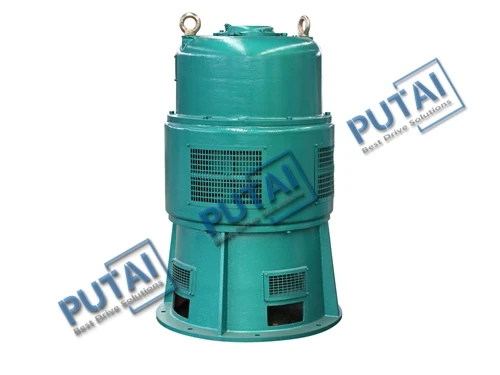

Properly equipped protection systems are essential for electric motors to prevent equipment damage and safety incidents caused by operational faults, ensuring stable and reliable operation. PUTAI Motor classifies motor protection into eight core categories, each with dedicated functions and hardware configurations.

Short-Circuit Protection As the fundamental safeguard for motors, it responds to phase-to-phase, earth, and turn-to-turn short circuits. Extreme fault currents can burn out windings and trigger accidents. This protection cuts off power instantly. Common devices include fuses, electromagnetic releases of circuit breakers, and instantaneous overcurrent modules in integrated motor protectors.
Overload Protection Designed for continuous overloaded operation, it prevents excessive current and thermal buildup that leads to winding insulation aging and burnout. It adopts inverse time characteristics and will not trip during normal motor startup. Typical components are thermal relays and electronic overload protectors.
Phase Loss & Three-Phase Unbalance Protection Mandatory for three-phase asynchronous motors. It monitors missing phases and unbalanced three-phase currents to avoid single-phase operation, sharp current rise and subsequent overheating damage. Electronic integrated motor protectors are widely deployed for this protection.
Locked-Rotor Protection Targets mechanical jamming or rotor locking. Fault current under locked-rotor conditions is close to short-circuit current. This protection trips power rapidly while distinguishing normal startup from rotor blockage, preventing instant motor burnout.
Overvoltage & Undervoltage Protection Guards against grid voltage anomalies. Low voltage results in insufficient motor torque, while high voltage breaks down insulation. Voltage relays and circuit breaker undervoltage releases are used for voltage monitoring and protection.
Earth Fault Protection Leakage protectors and zero-sequence current transformers detect insulation breakdown and casing leakage. It eliminates electric shock hazards and motor damage induced by grounding arcs.
Temperature Protection Commonly applied to medium, large and high-voltage motors. Thermistors and temperature sensors directly monitor winding and bearing temperatures. It compensates for blind spots of current-based protection when poor heat dissipation occurs.
Auxiliary Protection Covers phase sequence, speed and vibration monitoring. It prevents reverse rotation, runaway speed and bearing mechanical failures to deliver comprehensive operational safety.
Basic protection packages suffice for standard small motors. Medium, large and high-voltage motors, as well as medium-to-large DC motors manufactured by PUTAI Motor, require a full set of the eight protection categories to maximize operational stability and safety.