During the operation of a hot rolling production line, the scientific selection of the motor duty cycle is a critical prerequisite for ensuring the stable and efficient operation of the roughing mill and extending the service life of the equipment. In accordance with the international standard IEC 60034-1 (corresponding to the Chinese national standard GB/T 755, Rotating Electrical Machines-Rating and Performance)-and taking into account the roughing mill's operational characteristics of frequent starts, stops, and short-duration heavy loads-the S5 and S6 intermittent duty cycles emerge as the most suitable choices.

The specific definitions of these two cycles, along with a detailed explanation of the logic behind their suitability for roughing mills, are outlined below.
Specifically, the S5 duty cycle is an intermittent periodic duty cycle that incorporates electric braking.
Its complete operational cycle consists of four distinct stages
starting, constant-load operation, rapid electric braking, and de-energized stopping. Crucially, the motor does not reach a state of thermal equilibrium during any of these stages. Therefore, when selecting a motor for this duty cycle, it is essential to clearly specify key parameters such as the load duration factor, as well as the moments of inertia for both the motor and the load (e.g., S5 25% JM=0.2 kg·m²). The S6 duty cycle, conversely, is a continuous periodic duty cycle with a relatively simpler structure; it comprises only two stages-constant-load operation and no-load operation (without stopping)-and requires only the specification of the load duration factor.
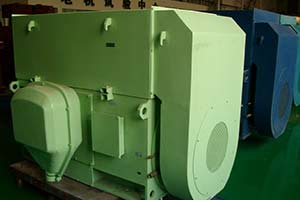
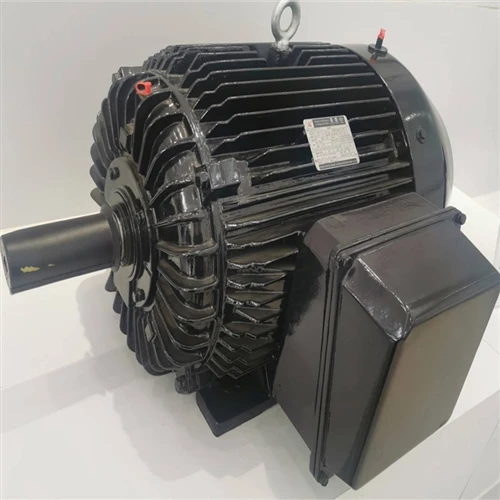
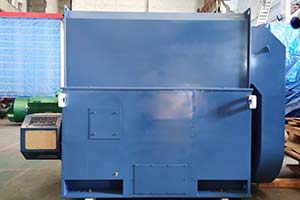
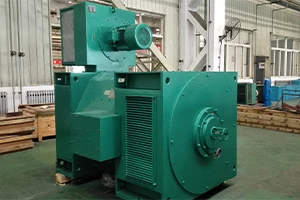
As a core front-end component of the hot rolling production line, the roughing mill is primarily responsible for the initial rolling of steel billets. Its operational workflow entails frequently biting into billets, enduring short-duration heavy rolling loads, and executing rapid stops to facilitate billet exchange. These operational characteristics align perfectly with the application scenarios of the S5 and S6 intermittent duty cycles, thereby enabling the motors to perform at their maximum efficiency. Based on the specific operational requirements of roughing mills, PUTAI offers a range of DC and high-voltage AC motors tailored to these working conditions. The recommended motor types-detailed below-are designed to precisely match the operational requirements of both the S5 and S6 duty cycles.
In practical application and selection, it is necessary to rationally configure parameters based on factors such as the roughing mill's production capacity and the specific materials being rolled.
The S5 duty cycle is primarily suited for the "rolling–billet exchange–standby" operational cycle. A load duration factor of 25% is the preferred recommendation for this cycle; it is ideally suited for small-to-medium capacity mills (producing ≤ 500,000 tons per year), as it effectively balances motor thermal management with the efficiency of billet exchange operations. A load duration factor of 40% serves as an alternative option; however, this is applicable only to high-capacity production lines and requires the installation of a supplementary forced-air cooling system to effectively control the motor's temperature rise.
The S6 duty cycle is tailored to the "continuous rolling-no-load transition" cycle; the standard recommends a load duration factor of 40%. This configuration is suitable for most 1-meter-wide roughing mills, where actual measured motor temperature rise remains within a reasonable range. The upper limit for the load duration factor is 60%; exceeding this limit necessitates the use of Class H insulated motors and the provision of adequate cooling time. Furthermore, during the selection process, constraints such as thermal equilibrium and rotational inertia matching must be satisfied. The load duration factor can be dynamically adjusted based on the specific material being rolled-such as low-carbon steel or stainless steel-thereby ensuring the stable operation of the equipment.
PUTAI Motor Selection Recommendations
For DC motors, the Z-series is the preferred choice (e.g., models Z450-3B and Z710-450).
- This series covers a power range of 200 kW to 3500 kW, with speeds reaching 200–1500 rpm. These motors feature capabilities for frequent starting, rapid braking, and overload resistance; with a Class F insulation rating, they are perfectly suited to the intermittent cycle requirements of the S5 duty cycle and can withstand the short-term heavy loads and frequent reversing conditions typical of rolling mills. For high-voltage AC motors, the YRKK series-high-voltage, three-phase, asynchronous, wound-rotor, slip-ring motors-is recommended.
- This series is designed to accommodate the heavy-load characteristics of rolling mills and is capable of driving heavy-duty equipment such as roughing mills. When paired with a variable-frequency speed control system, these motors can flexibly adapt to the continuous-cycle operation of the S6 duty cycle, balancing both operational stability and energy efficiency while meeting the load fluctuation demands of roughing mills with varying production capacities. Both motor types are manufactured in strict compliance with relevant IEC standards; they are capable of withstanding the harsh operating environments of rolling mills and are highly compatible with the S5 and S6 duty cycles as well as typical roughing mill operating conditions.
Furthermore, specific model parameters can be further customized based on the rolling mill's production capacity and the materials being processed.