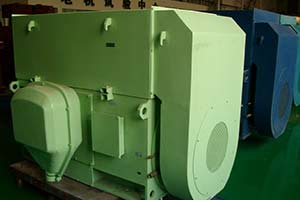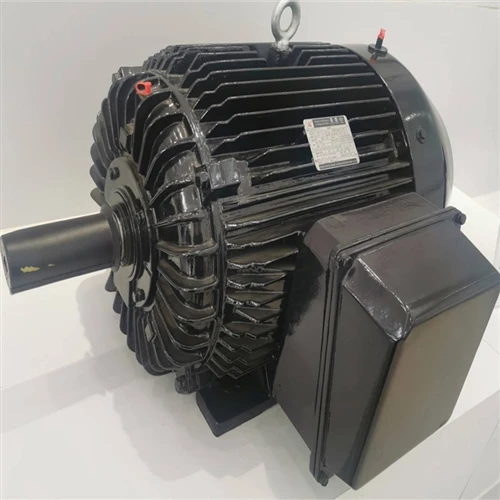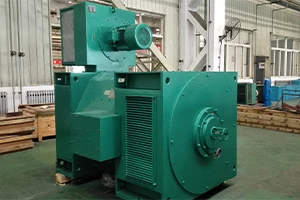
In industrial production, a common challenge encountered during the startup of high-voltage motors is that the power grid's current capacity is often insufficient to accommodate the motor's high starting current. If an inappropriate starting method is selected, it can result in damage to grid infrastructure or a reduction in the motor's service life. To address this dilemma, the following three starting methods offer effective mitigation strategies; they can be flexibly selected based on specific application scenarios, with PUTAI Motors providing tailored adaptation solutions.
dual-shaft extension starting
In this configuration, the high-voltage motor is designed with extensions at both ends of the shaft; a smaller auxiliary motor is connected to the non-drive end. Prior to startup, the auxiliary motor drives the high-voltage motor to a speed approaching its rated velocity. The closer the motor speed gets to the rated speed, the lower the starting current becomes-though the precise magnitude of this current reduction has yet to be empirically verified through testing.
stator series resistance starting
This technique reduces the starting current by inserting resistors in series within the motor's stator circuit. However, while increasing the resistance effectively lowers the starting current, it simultaneously results in a corresponding reduction in the motor's starting torque. The third method-repeated start-stop cycling-is highly inadvisable; since the motor's current typically reaches its peak within five seconds of being energized, subjecting the motor to repeated starting and stopping cycles will cause severe damage.
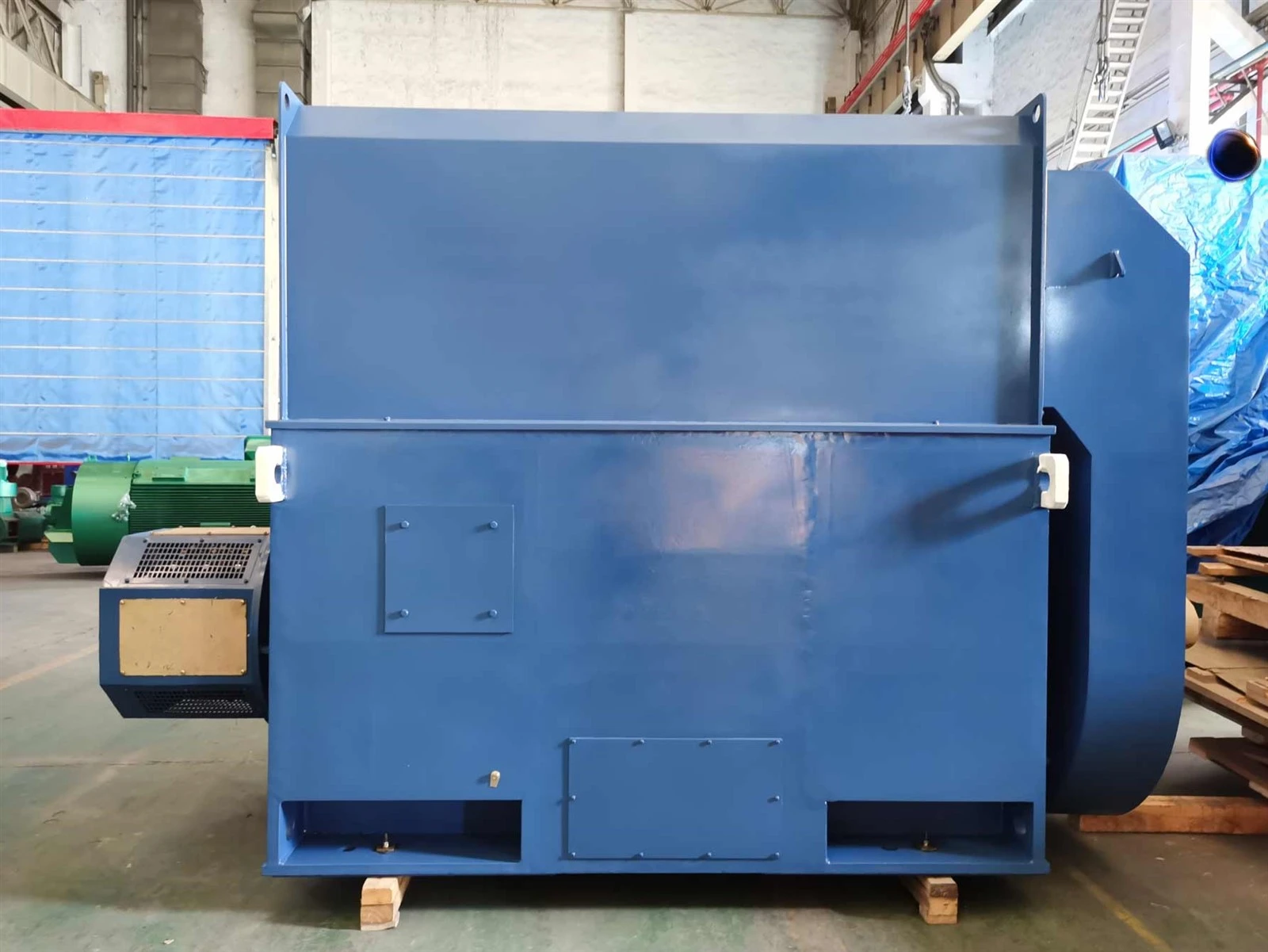
PUTAI Motors specializes in the field of high-voltage motors
Specifically addressing startup scenarios characterized by insufficient grid current capacity, its YRKK series of high-voltage AC motors offers flexible compatibility with the two scientifically sound starting methods described above.
These motors feature high-quality winding materials and an optimized structural design, and can be paired with customized dual-shaft extension configurations or specialized stator series resistance adaptation modules.
This approach effectively mitigates the impact of the starting current on the power grid while simultaneously maximizing the retention of starting torque.
The products have obtained authoritative certifications, boast an insulation class rating of F, and are ideally suited for industrial applications such as rolling mills and mining operations, thereby providing a reliable solution to the complex challenges associated with high-voltage motor startup.